1968
-

Ray Davies builds an entire emotional universe out of small-town memory, disappearing traditions, and ordinary people quietly slipping out of history. Songs like “Do You Remember Walter?” and “Picture Book” aren’t nostalgic in a simple sense; they understand that memory distorts and softens things even as time erases them. Musically, the album avoids psychedelic excess in favor of acoustic textures, music hall melodies, and subtle arrangements that reward close listening. The band plays with remarkable restraint, letting character and atmosphere lead the songs. What makes the record endure is how specific its worldview is — funny, melancholy, affectionate, and slightly skeptical all at once. It helped establish that rock albums could be intimate cultural documents rather than just collections of songs.
-
The Beatles
The White Album is less a unified statement than a massive archive of four brilliant, restless musicians pulling in different directions simultaneously. Folk songs, musique concrète, proto-metal, country, chamber pop, satire, and raw blues all coexist because the band had become confident enough to follow almost any idea to completion. “While My Guitar Gently Weeps,” “Happiness Is a Warm Gun,” and “Helter Skelter” alone would make it historically important. Its messiness is essential to its personality; the album constantly risks collapse and becomes more exciting because of it. You can hear individual identities hardening inside the group dynamic, which gives the record unusual psychological tension. A huge amount of later indie and alternative music inherited its sense that contradiction itself could be an aesthetic.
-
The Band
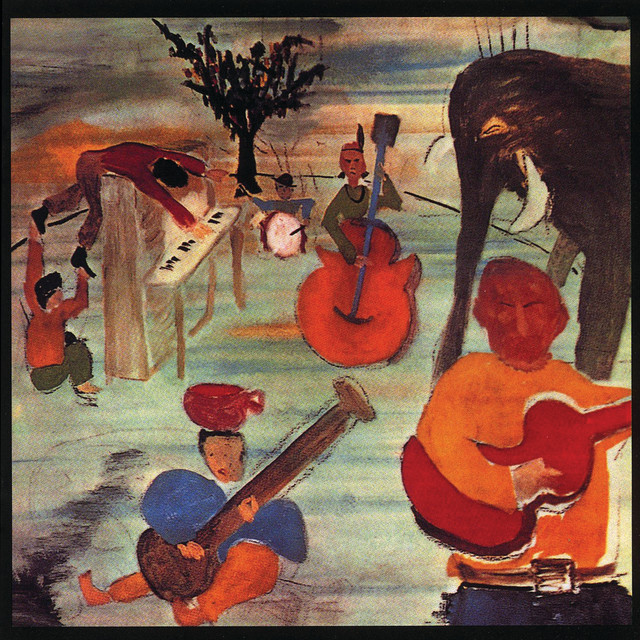
The Band make rock music sound rooted, communal, and strangely ancient without becoming revivalists. “The Weight” feels mythic because of its storytelling precision and relaxed groove, while “Tears of Rage” and “I Shall Be Released” reveal how deeply the group understood emotional ambiguity. Every musician contributes equally to the atmosphere — Garth Hudson’s organ, Levon Helm’s drumming, Rick Danko’s bass, Richard Manuel’s voice — creating songs that feel inhabited rather than arranged. The album redirected late-1960s rock away from psychedelic abstraction toward something earthier and more human-scaled. Yet it never sounds simple; the emotional textures are too complicated for that. It’s a record obsessed with roots while remaining completely singular.
-
 The Rolling Stones
The Stones strip away psychedelic ornamentation and rediscover how dangerous simplicity can sound. “Sympathy for the Devil” transforms historical violence into theatrical groove, while “Street Fighting Man” compresses political unrest into acoustic guitars and compressed distortion that somehow sound explosive. The acoustic blues and country material give the album surprising looseness and warmth beneath the menace. Charlie Watts’ drumming is especially crucial — patient, precise, never showy. The band sounds hungry again here, less interested in experimentation for its own sake than in sharpening their identity. It’s one of the records where classic rock becomes darker, leaner, and more psychologically complex.
-
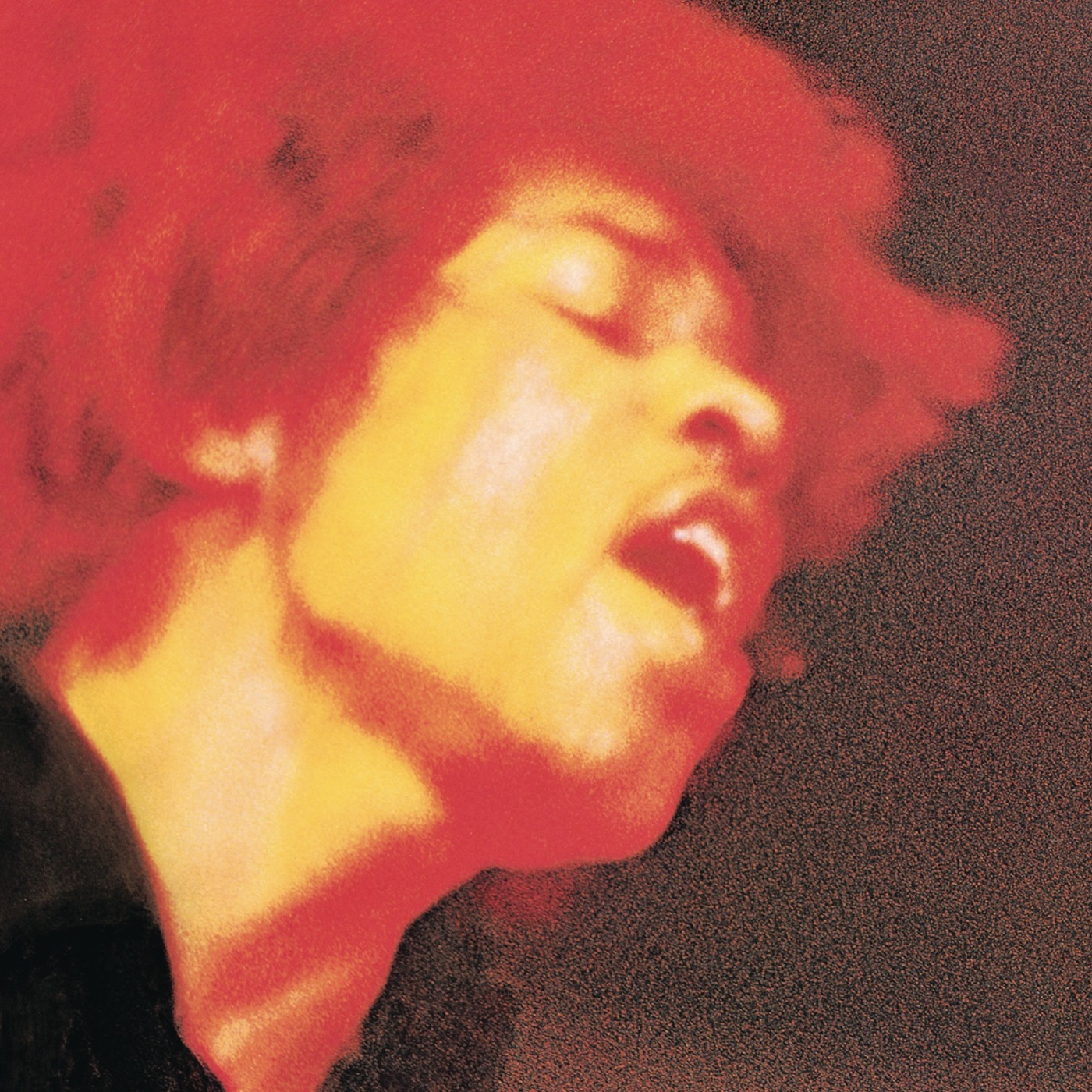 The Jimi Hendrix Experience
Hendrix uses the studio less as a recording space than as an extension of improvisation itself. “Voodoo Child (Slight Return)” and “1983...(A Merman I Should Turn to Be)” stretch rock music into dream logic: fluid, immersive, and constantly transforming. Even shorter songs like “Crosstown Traffic” and “Burning of the Midnight Lamp” overflow with strange sonic detail. Hendrix’s guitar playing is obviously astonishing, but what really separates the album is its sense of curiosity — every texture feels explored rather than merely displayed. The record expands psychedelic rock into something cosmic, erotic, funny, and deeply musical all at once. It still sounds less like a genre album than a universe unto itself.
-
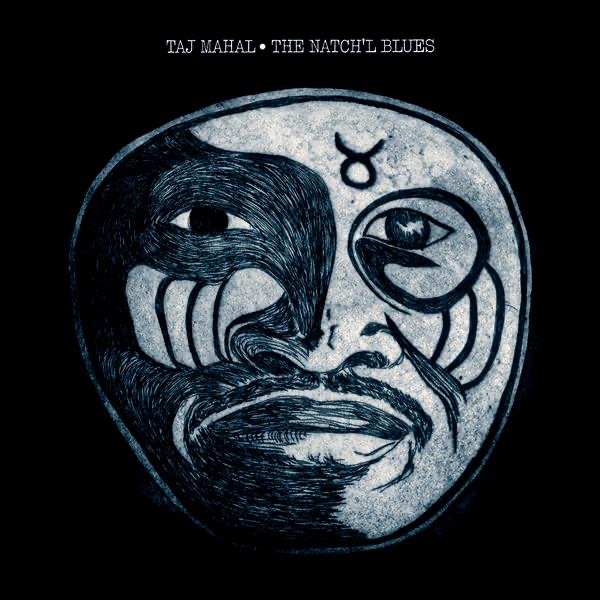 Taj Mahal
Taj Mahal approaches blues not as preservation but as living, adaptable music connected to multiple traditions. The album moves easily between Delta blues, Caribbean rhythm, folk, and electrified groove without sounding academically “eclectic.” “Corinna,” “Done Changed My Way of Living,” and “She Caught the Katy” all feel relaxed yet deeply intentional. Taj’s voice carries warmth and humor even in darker material, which gives the album unusual openness. The arrangements leave plenty of room for rhythm and texture instead of crowding everything with virtuosity. The record quietly broadened ideas about what blues-based music could include.
-
 Miles Davis
This album captures Miles Davis in transition, with acoustic post-bop slowly dissolving into electric fusion. The rhythm section already moves differently here — more open, less tied to traditional swing patterns, constantly reshaping the music underneath the solos. Tracks like “Frelon Brun” and “Mademoiselle Mabry” feel suspended between jazz structure and atmospheric drift. Herbie Hancock and Chick Corea overlapping on keyboards gives the album a strange, fluid harmonic texture. The music sounds exploratory without becoming chaotic, as though the band is discovering a new language while speaking it. You can hear the future of jazz arriving in real time.
-
 The Velvet Underground
The album pushes rock music toward noise, repetition, and psychological extremity with almost hostile determination. “Sister Ray” turns seventeen minutes of chaos into a kind of ecstatic endurance test, while “I Heard Her Call My Name” practically tears itself apart through distortion. Yet beneath all the abrasion is remarkable structural intelligence — the band understands exactly how repetition alters perception. John Cale’s organ and viola work are crucial, turning the music into a vibrating wall rather than a traditional rock arrangement. The record rejected nearly every idea of “good taste” in late-1960s rock. Entire genres of punk, industrial, noise rock, and experimental music begin here.
-
 Miles Davis
The album quietly overturns jazz conventions by having the rhythm section improvise while the horns repeat composed melodies. That inversion gives tracks like “Nefertiti” and “Fall” an uncanny feeling of constant motion beneath apparent stillness. Wayne Shorter and Herbie Hancock are especially important to the album’s atmosphere, bringing harmonic ambiguity and emotional subtlety to every passage. Tony Williams’ drumming sounds almost orchestral in how it reshapes the music moment to moment. Rather than chasing spectacle, the quintet pursues refinement and instability simultaneously. The album feels intensely alive because nothing settles completely into place.
-
 Aretha Franklin
Aretha Franklin sounds utterly authoritative here — not just vocally powerful, but emotionally and musically in command of every arrangement. “Think” transforms self-respect into kinetic energy, while “I Say a Little Prayer” balances elegance and rhythmic precision effortlessly. The interplay between gospel phrasing, soul groove, and pop songwriting is seamless throughout the record. Even quieter moments carry enormous force because Franklin understands exactly when to hold back. The Muscle Shoals and Atlantic musicians give her the perfect foundation: flexible, rhythmic, deeply responsive. The album captures soul music at its most confident and expansive.
-
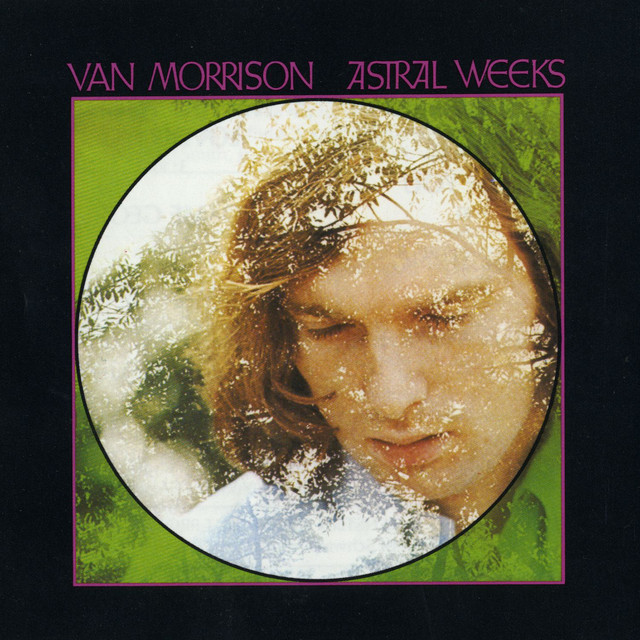
Van Morrison
Rather than functioning like conventional songs, the tracks drift and spiral like streams of consciousness set to music. Morrison’s vocals move freely across folk, jazz, soul, and poetry without seeming constrained by meter or structure. “Cyprus Avenue,” “Madame George,” and “Sweet Thing” feel intensely personal while remaining emotionally elusive. The jazz musicians surrounding Morrison give the album fluidity and motion rather than fixed accompaniment. It’s one of the few records that genuinely feels improvised emotionally, even when carefully arranged musically. The album remains singular because it values feeling and atmosphere over resolution.
-
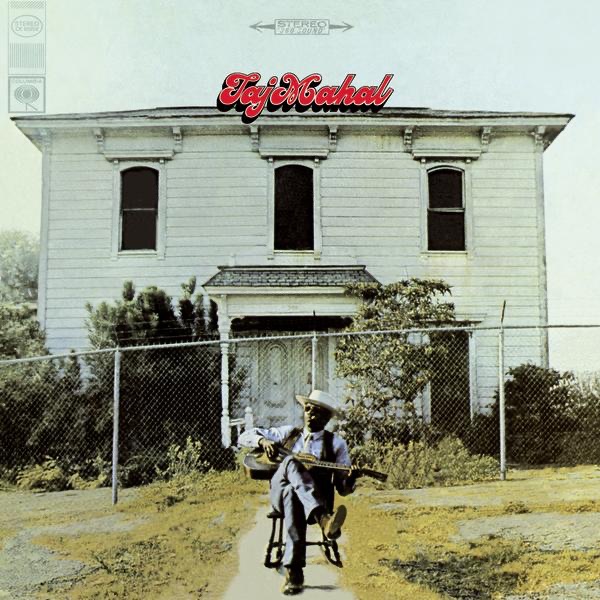 Taj Mahal
Taj Mahal’s debut reintroduces blues music as something vibrant, rhythmic, and globally connected rather than historically sealed off. “Leaving Trunk,” “Statesboro Blues,” and “Dust My Broom” all sound rooted in tradition while carrying enormous energy and personality. Taj’s vocal delivery avoids imitation; he sounds conversational, playful, and fully present inside the songs. Jesse Ed Davis’ guitar work adds toughness without crowding the grooves. The album helped younger rock audiences hear blues as living music again rather than archival influence. Its warmth and openness still make it inviting.
-
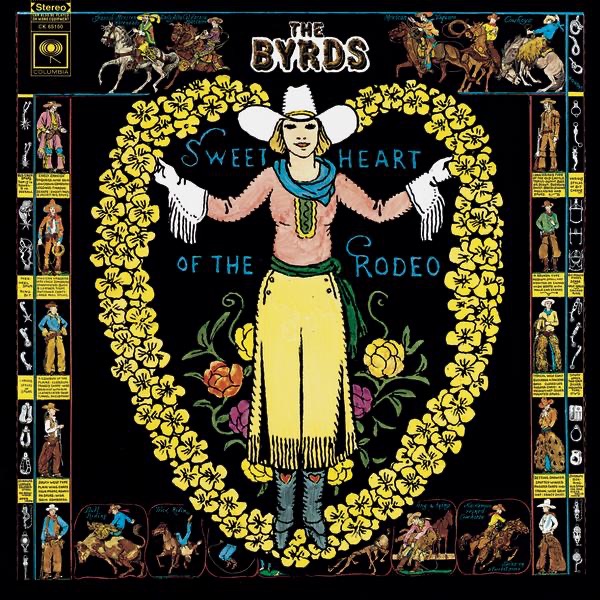 The Byrds
The Byrds approach country music with enough sincerity that the album transcends mere stylistic experiment. Gram Parsons’ influence is obvious, but the band’s harmonies and melodic instincts keep the record from becoming straightforward Nashville imitation. “You Ain’t Goin’ Nowhere,” “Hickory Wind,” and “I Am a Pilgrim” blend melancholy and ease beautifully. The album helped create country-rock, though at the time it confused both rock and country audiences. What makes it last is the emotional directness underneath the stylistic shift. It sounds less like genre tourism than musicians searching for clarity.
-
 The Zombies
The album combines baroque pop sophistication with emotional intimacy and melodic precision. “Care of Cell 44” and “This Will Be Our Year” sound warm and hopeful, while “Butcher’s Tale” introduces unsettling historical darkness into the middle of the record. Rod Argent’s keyboard arrangements and Colin Blunstone’s breathy vocals create a uniquely weightless atmosphere. The harmonies are intricate without becoming ornate for their own sake. Released just as the band was collapsing, the album initially disappeared commercially before gradually becoming hugely influential. Its emotional subtlety still feels unusually modern.
-
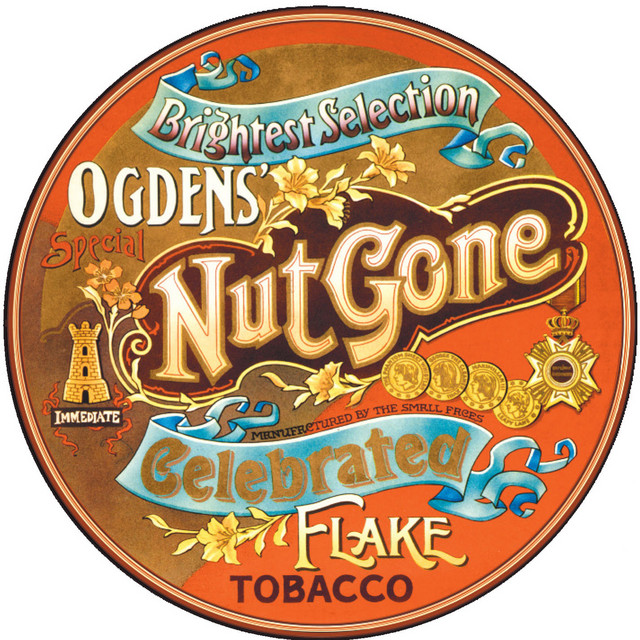
Small Faces
The album mixes psychedelic whimsy, hard rock energy, music hall humor, and genuine melodic sophistication in ways that should feel chaotic but somehow don’t. “Afterglow,” “Song of a Baker,” and “Lazy Sunday” reveal how versatile the band actually was beneath the cartoonish concept elements. Steve Marriott’s voice gives the record its emotional center — gritty, soulful, and completely alive. The second-side fairy tale narrative is bizarre and playful without losing musical momentum. The album captures the late-1960s British scene at its most imaginative and eccentric. Beneath the silliness is a remarkably inventive rock band.
-
 Aretha Franklin
Aretha balances elegance and raw emotional force with astonishing consistency here. “Chain of Fools” turns repetition into intensity, while “(You Make Me Feel Like) A Natural Woman” achieves intimacy without sentimentality. The rhythm sections are lean and deeply grooving, leaving Franklin room to shape every phrase dynamically. Even the album’s quieter moments carry enormous authority because of her control and timing. Soul music often gets discussed in terms of vocal power alone, but Lady Soul is equally impressive as ensemble music. Everything on the record serves emotional communication directly.
-
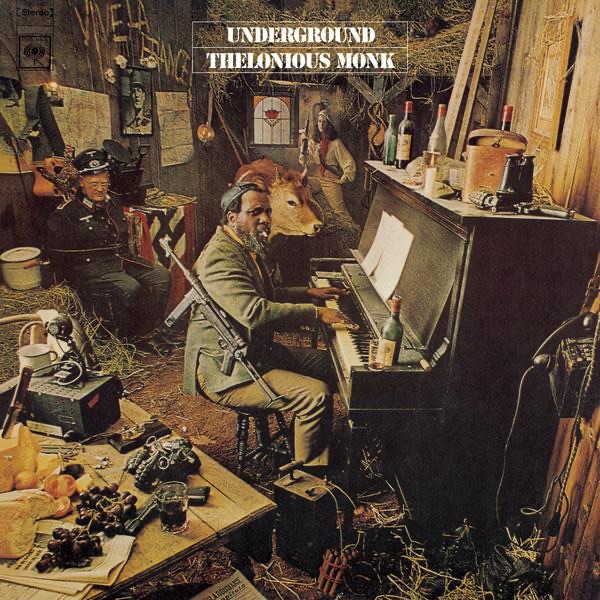 Thelonious Monk
Monk’s compositions sound simultaneously playful and structurally radical, full of strange pauses, crooked melodies, and rhythmic feints that keep the listener slightly off balance. Tracks like “Ugly Beauty” and “Raise Four” reveal how lyrical Monk could be without smoothing out his angular style. Charlie Rouse’s tenor saxophone provides warmth and continuity against Monk’s percussive piano approach. The album feels less concerned with virtuosity than with personality and shape. Monk understood that repetition and silence could create as much tension as speed or density. The music remains surprising because it refuses predictable emotional cues.
-
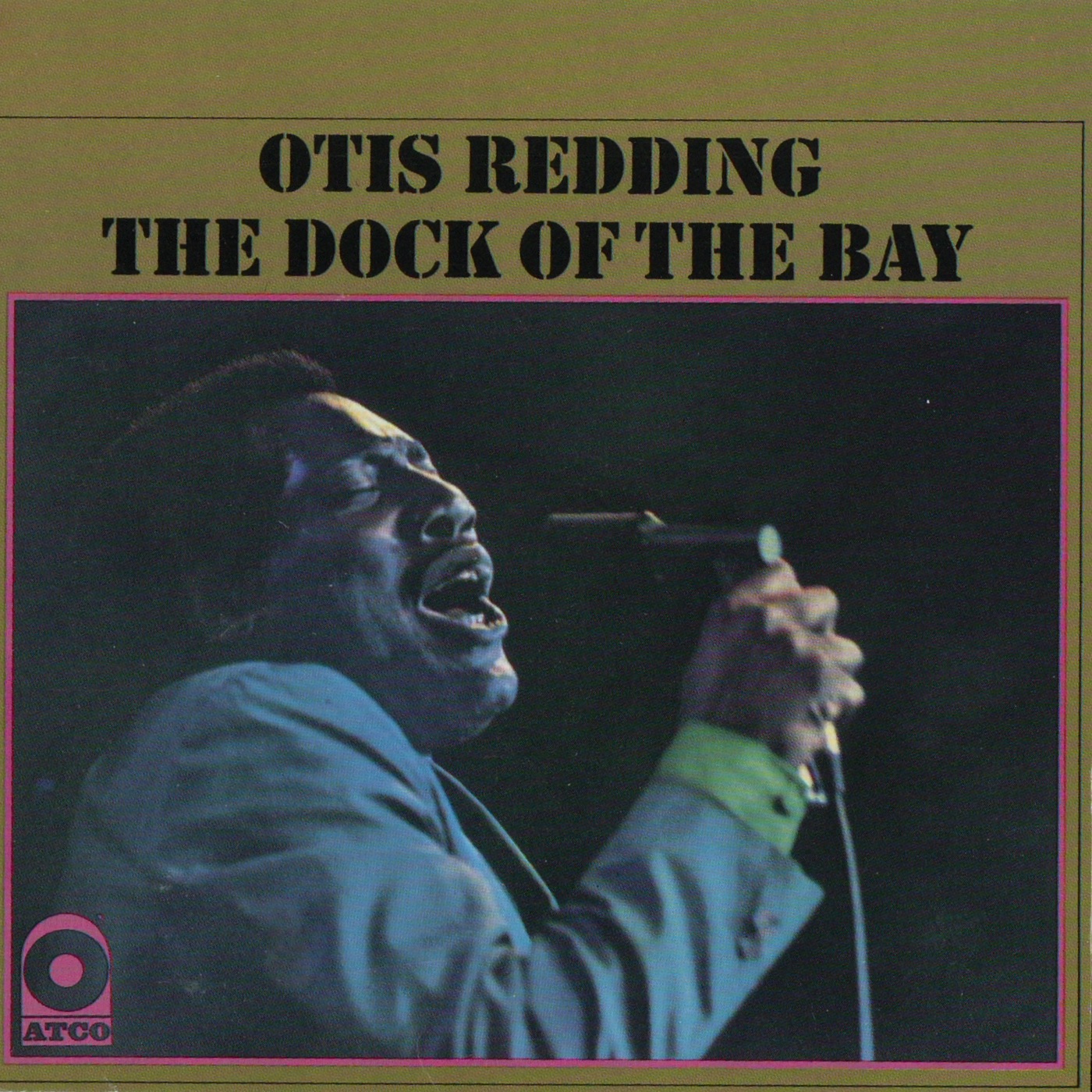 Otis Redding
The album captures Otis Redding broadening his sound just before his death cut that evolution short. “(Sittin’ On) The Dock of the Bay” introduces a reflective, almost restless mood unusual for Southern soul at the time, while songs like “I Love You More Than Words Can Say” retain his physical immediacy. Redding’s voice balances grit and tenderness effortlessly. The arrangements are cleaner and more spacious than some earlier Stax recordings, giving the songs room to breathe. There’s a sense throughout the album that Redding was moving toward something more expansive stylistically. That unfinished feeling gives the record extra emotional weight.
-

Recorded live at the Fillmore, the album captures Albert King’s guitar playing at its most conversational and commanding. His bends and phrasing feel almost vocal in their emotional precision, especially on “Blues Power” and “Born Under a Bad Sign.” Unlike many live blues albums, the performance never feels trapped in routine bar-band energy. The grooves stretch comfortably, allowing King to shape tension gradually rather than overwhelm through speed. The audience interaction adds looseness without turning the set into spectacle. It’s a masterclass in expressive economy.
-
 Herbie Hancock
Hancock creates an unusually delicate and translucent jazz sound here, built around flugelhorn, bass trombone, and alto flute rather than more aggressive horn textures. The title track and “Riot” move with quiet sophistication, emphasizing color and atmosphere as much as improvisation. Ron Carter and Mickey Roker provide rhythmic flexibility without crowding the arrangements. The album feels introspective without becoming passive. Hancock’s writing balances melodic accessibility and harmonic subtlety beautifully. It’s one of the great examples of jazz composition functioning as emotional architecture.
-
 The Byrds
This album captures a band fragmenting internally while becoming more adventurous musically. Psychedelia, country, electronic experimentation, harmony pop, and jazz touches all coexist inside remarkably concise songs. “Draft Morning,” “Wasn’t Born to Follow,” and “Change Is Now” feel exploratory without losing melodic focus. The production layers Moog synthesizers, tape effects, and intricate vocal arrangements into a surprisingly cohesive atmosphere. There’s a strange emotional coolness to the record that makes it feel slightly futuristic even now. It’s one of the most quietly innovative albums of the late 1960s.
-
 Miles Davis
This is one of the key transition points where Miles Davis begins moving decisively toward electric instrumentation and groove-oriented structures. Tracks like “Stuff” and “Paraphernalia” stretch jazz rhythm into something more open and hypnotic. Tony Williams’ drumming pushes constantly against the beat, giving the music nervous momentum. The electric piano textures subtly reshape the emotional atmosphere of the album without fully abandoning acoustic jazz. Rather than a sudden stylistic break, the record documents gradual transformation. Its tension comes from hearing an established language being dismantled piece by piece.
-
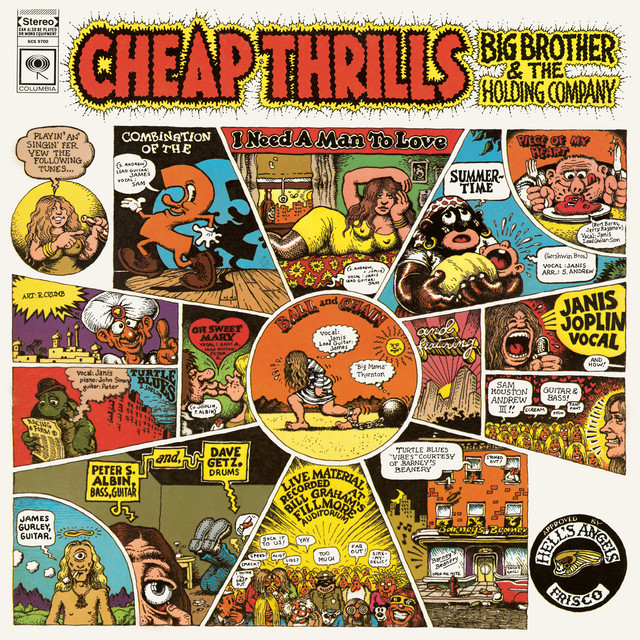
Big Brother & The Holding Company, Janis Joplin
Janis Joplin dominates the album so completely that the performances can feel almost physically overwhelming. “Piece of My Heart” and “Ball and Chain” work because Joplin treats emotional collapse as something immediate and bodily rather than theatrical. The band’s looseness actually helps the record, creating unstable momentum around her voice instead of polished accompaniment. The fake-live production concept adds to the chaotic energy rather than distracting from it. Psychedelic rock often prized detachment or abstraction; Cheap Thrills is startlingly direct. It remains one of the rawest mainstream rock albums of its era.

Do you like albums?
Want to make a list?
It’s free & easy &
the Whale is nice!
Learn more